
Garden Maintenance West Ham — Recycling and Sustainability
Welcome to the sustainability page for Garden Maintenance West Ham. Our commitment is to create thriving green spaces while reducing waste, cutting carbon emissions and supporting local circular-economy projects. This page explains how our eco-friendly waste disposal area and sustainable rubbish gardening area operate, what targets we set, and the partnerships that help us divert garden waste from landfill across West Ham and neighbouring boroughs.Designing an eco-friendly waste disposal area
We design on-site, labelled sorting zones so every job has a clear path from waste generation to treatment. Our sustainable rubbish gardening area includes separate containers for green waste, woody materials, recyclable plastics and metals, and reusable items like planters and tools. These zones minimise contamination and reduce haulage trips. Simple measures such as covered bins to avoid waterlogging, sealed compost bays and designated drop points for hazardous packaging make a big difference to final recycling rates.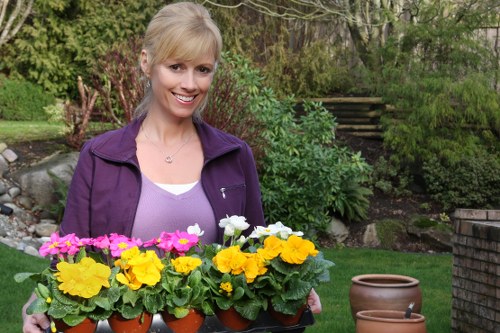 Our operational goal is measurable: we have set a company-wide recycling percentage target of 70% by 2027 for all garden and landscaping material from West Ham jobs. To achieve this we track green waste volumes, wood chip reuse, soil reconditioning and other streams. We break down progress by job and by neighbourhood so our team can see improvements. Key activities that feed this target include:
- On-site segregation: separating biodegradable green waste from inert materials;
- Wood chipping and reuse: turning branches into mulch for reuse on site or within community projects;
- Container reuse and repair: collecting intact plant pots and tools for redistribution to charities.
Local transfer stations and resource hubs
We work with transfer stations and resource recovery facilities serving Newham and east London to ensure responsible processing. Waste is taken to licensed local transfer stations that serve the borough, where material is sorted, composted or forwarded to specialist recyclers. Where appropriate, organic material is delivered to regional composting facilities and material recovery parks that accept landscaping residues. By keeping processing local we reduce haulage distance and the carbon footprint of disposal.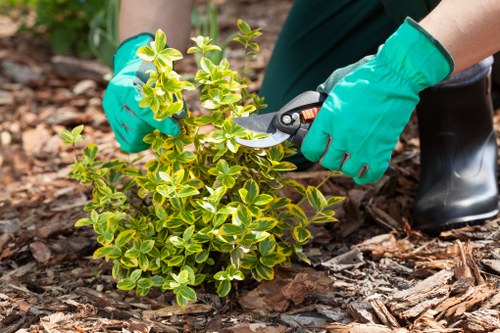
Partnerships with charities and community groups
Our recycling strategy includes active partnerships with local charities, community allotments and social enterprises. We donate reusable pots, surplus plants and garden furniture to local projects and partner with non-profit reuse organisations to redistribute usable equipment. These relationships support circular reuse in West Ham — rescuing perfectly serviceable items, helping community spaces prosper and reducing municipal waste loads. We also collaborate with volunteer groups to channel wood chip and compost to community orchards and school gardens.Aligning with borough waste separation policies
We follow the boroughs' approach to waste separation when working in Newham and adjacent areas: separate streams for dry recycling, food and garden waste are respected and we ensure materials are prepared according to local guidance before collection. Where borough rules differ from site to site, our crews adapt: labelled sacks, clear signage and trained operatives reduce cross-contamination and speed compliance with council recycling schemes.Low-carbon vans and cleaner logistics — cutting transport emissions is essential to sustainable garden maintenance. Our fleet already includes electric and low-emission hybrid vans used on shorter urban rounds, and route planning software reduces empty running. We are phasing in additional battery-electric vans and investing in bike trailers for small jobs where feasible. These measures lower the carbon footprint of each job and support a greener service for West Ham residents and businesses.
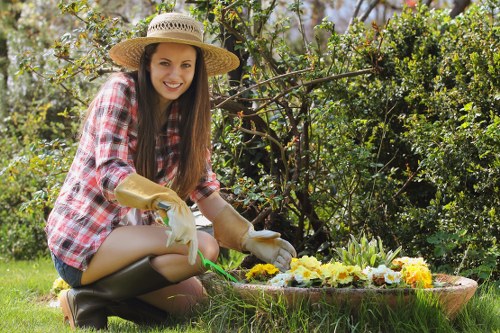 How we handle specific recycling activities: green waste is composted or aerobically digested where possible; woody arisings are chipped and used as mulch or sent to biomass processors; soils are screened and reused on site or sent to soil reconditioning facilities; broken paving, concrete and hardcore are separated and delivered to aggregate recycling centres. We also sort plastics (pots and trays), metals (fencing, furniture), and glass, ensuring each recyclable stream is directed to the correct local processor to maximise recovery.
 Practical features of our sustainable rubbish gardening area: on-site colour-coded containers, clear job-by-job waste manifests, and a reuse box to collect items suitable for charity redistribution. Our teams carry out a short waste assessment at each job start to decide what will be reused, recycled or require specialist disposal. We emphasise prevention — selecting long-lived materials, reusing soil and mulch and avoiding single-use plastics in planting where alternatives exist.
Commitment and transparency — Garden Maintenance West Ham publishes annual recycling performance summaries for internal review and continuous improvement. We maintain a forward plan to increase our reuse partnerships, expand electric vehicle use and work more closely with local transfer stations and community projects. By combining on-site segregation, targeted recycling activity and low-carbon logistics, we create greener, healthier gardens and support the circular economy across West Ham and neighbouring boroughs.